
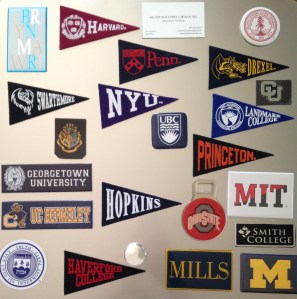
 Melody Lowman is available to assist individuals and families with the challenging process of college selection and the application process.
As a fencer, fencing mother and fencing grandmother, and member of USFA, she is familiar with the fencing programs in United States colleges and universities, from Division I to Club fencing. She is Safe Sport Certified and a member of the Positive Coaching Alliance. Melody can guide the young fencer and other athletes and their families through planning, searching and applying processes. (She does NO recruiting and does not represent any specific program) See the Advancing Toward College website page.
Melody does not require a contract or a package, but charges only for time and services used.
If she is not an appropriate resource for your family, she will assist you with a referral to an alternative consultant.
ARE YOU READY FOR THE DEMANDS OF COLLEGE?
Can you read up to 200 pages in a week?
Do you have a system for taking notes that works for you?
Can you write a well-organized paper 10 pages long and use references and citations?
Do you have a method for preparing for tests that works for you?
If you have a learning difference or disability can you advocate for yourself?
Are you aware of your own strengths and weaknesses as a student?
Are you able to ask teachers for help when you need it?
Do you have a system for keeping track of appointments and due dates?
Are you able to manage your money?
Can you keep track of your belongings?
Can you take care of your belongings, such as your laundry?
Are you able to get yourself to begin, persist at and complete assignments?
Do you know what you want from attending college?
If you answered, “No” to any of the above questions ask a trusted adult to help you master that life skill. If you answered “No” to several of the above questions, and you are close to graduating from high school, you might consider attending community college or a gap year with a clear plan to get help to be more ready to go away to college.
AS YOU PREPARE TO CHOOSE A COLLEGE…
Choosing a college for yourself or with your teen? First ask: what are your student’s priorities?
THINK ABOUT WHAT YOU WANT IN A COLLEGE
Use the list below to help you identify your priorities. You could use it as a checklist by marking the characteristics that are most important to you with a 1. Mark it with a 3 if it is not important to you at all, and mark it with a 2 if it is neither important, nor unimportant:
____Public college or university
____Private college or university
____Substantial financial aid
____Small college
____Large university
____Professor/Instructor availability
____Residential-most undergraduates live on campus
____Commuter-many, or most students commute by car or public transit
____Urban-in or near a large city
____Suburban
____Small town
____Rural
____Small Classes
____Progressive/Liberal
____Conservative
____Location close to family members
____Coed (both men and women attend)
____Single gender (just men or just women)
____Diversity
____LGBTQ+ Friendly
____Strong study abroad opportunities
____California
____West Coast of the United States
____Northwestern United States
____Midwestern United States
____Eastern United States
____Southern United States
____European college or university
____France
____Germany
____England
____Scotland, Wales, Ireland
____Liberal arts emphasis
____STEM emphasis
____Specific subject area strength
____Arts specialty
____Music specialty
____Foreign language specialty
____Strong athletics in general
____Specific recruitment to my sport
____Co-op program (work for credit in my specialty while studying)
____Learning services for learning disability or difference
____Physical disability services
____Legacy-close family member graduated or is currently attending
____Specific climate (warm weather, easy access to water, easy access to snow, etc.)
____Greek Life (fraternities/sororities)
____Religious affiliation in my faith
____Other
IMPORTANT
- No school is perfect: which weaknesses can you live with or supplement?
- Look for goodness of fit with your family’s style and beliefs.
- Be realistic about your young person’s academic ability and maturity.
- Let the student know that schools and families choose each other.
- Do not suggest to the student that he or she alone will choose the school; he or she will have input, but family, school and student make the final choice.
- If possible, visit school drama productions, sports events or science fairs.
- Make the visits positive and relaxed.
- Let your student be him or herself. The student will be more relaxed.
- Let your high school or college-bound student take the lead on a visit.
- Be honest with yourself about what is financially realistic.
- Be truthful with the school or college; answer all questions honestly.
- At many schools both the student and family are considered for goodness of fit.
- Be courteous and discreet with school and college personnel and other parents.
- At the high school and college level act as an “executive assistant” to your child.
- Keep communication with your child and the schools positive and open.
- Keep good records!
- Follow directions! (This is a constant complaint from schools and colleges)
- File all paperwork and make payments on time.
- Don’t ask for special favors from schools unless there is an emergency.
- Utilize free resources such as the College Board and ACT Websites.
- Don’t limit your options or count on anything until it is in writing.
- NO ONE can offer admission to a school or college except the Admissions Office.
COLLEGE SELECTION AND APPLICATION MYTHS
“Private colleges are harder to get into than public colleges” Not always so!
“Private schools are too expensive” Many private colleges offer generous financial aid
“Famous colleges are better” A regrettably common myth that causes students to miss out on some wonderful educational opportunities.
“Excellence in a sport will result in a scholarship.” Not necessarily! Grades come first and Ivy League schools don’t grant athletic scholarships and colleges have limited athletic scholarship money.
“If parents, grandparents and siblings went to a college then a student will automatically be admitted.” This is not true. While having a close relative who is an alumnus might help, it does not guarantee an acceptance.
“A coach will get me in.” “A coach promised I would be accepted.” A student should not consider himself/herself accepted until an official letter of acceptance is received from the Admissions Office of a college or university.
“If I have a bad grade or a bad semester I won’t be able to get into a college.” Many colleges allow a student to explain unusual circumstances that led to a lower grade or a poor semester. Sometimes colleges will admit a student provisionally and allow the student to make up a grade or demonstrate ability to do college work. Don’t give up without trying!
WHAT DO COLLEGE CONSIDER IN APPLICANTS
Each college takes different factors into consideration, and give different weight to each factor. The list below represents most of the factors colleges tend to take into consideration. When you work with a college advisor or educational consultant he or she can help you research which factors apply to the colleges you are considering.
The first three factors are usually weighed most heavily by most colleges:
- High school grades, 9th through all of 12th
- Test scores (Some colleges are “test optional, which means that the student can take and submit scores, but is not required to do so)
- Quality of writing (very important)
- Extracurricular activities-especially long-term participation and relatedness to possible major or career
- Demonstrated leadership
- Letters of recommendation Immediate family member/s graduated from the college
- Family history of alumni participation and donation
- Athletic achievement-heavily weighed for recruited athletes
- Artistic achievement-heavily weighed for fine and performing arts majors and special colleges
- Research internships or jobs, especially related to the student’s academic interest of objective
- Interview with Admissions Representative or Alumni Representative
- Evidence of visiting and touring the campus, which demonstrates serious interest in the school
- Evidence of good character (no suspensions, arrests etc.)
- Good explanations for a period of lower academic performance
- Geographic distribution (if the college is interested in admitting someone from your home state or country)
- Your strong preference for the college
- Some unusual personal achievement
- For colleges with religious affiliations-your statement of faith and evidence of our active participation in your faith community
DID YOU KNOW…?
- Famous name colleges are not necessarily better for every student.
- Where you live can increase or decrease your admission chances.
- Freshman year and second semester senior year of high school “count” toward admission to college.
- Admission officers and college coaches sometimes check a student’s social media.
- A family’s financial aid application information is frequently cross-verified with the IRS.
- You are NOT admitted until the college and the student have signed admission documents.
- Sometimes private colleges can cost less than public colleges.
- When you receive your financial aid packages, you can negotiate for more if you need to do so.
- A very common reason for not being admitted, even when qualified, is failure to follow application instructions.
- Students do not necessarily graduate in four years.
- Elite colleges don’t look for “well-rounded” students, they look for “oval” students who have demonstrated long term interests and achievements.
MAKING THE MOST OUT OF VISITING COLLEGE CAMPUSES
Trips to visit colleges can be expensive and time consuming. There are many things parents and students can do to make the most of campus visits.
Before you leave, read the website of the college. Read student reviews such as those on College Prowler. Read the information in a college guidebook such as Fiske or Barron’s. Don’t judge a school prematurely on the basis of what just one person says about a school. If you are seriously interested in the college, print out the information to take with you on your visit.
Try to visit at least one day when the college is in session. It is hard to judge the character of a college when students are studying or taking finals, or on vacation. If the website gives information about tours for prospective students make notes about when tours are offered, where the tour begins, and if you need to make a reservation, then do so. Check the weather prediction to see if you need to take a coat or umbrella. Wear comfortable shoes. If you have a car, when you first arrive at a school, drive around the local community and the campus to get oriented; look around. Do you generally like what you see? One of the best places to visit while you are on campus is the Admissions Office where you can often get booklets and other handouts that are not on the website. Be sure to get a map of the campus if you haven’t printed one from the website. Take a guided tour, or a self-guided tour. Ask if you can see something that is of special interest to you, such as a dorm room, a music practice studio or the area where your sport is practiced. If there is an instructor or coach you would really like to work with, see if you can make an appointment with that person. Find out if you can eat on campus where students eat. Go to the library and the Student Center. Pick up a campus newspaper. Reading it will give you an idea of what is of interest to students on that campus. Go to the campus bookstore. An especially good area to visit is the textbook section. In the textbook section of the department you are especially interested in, you will see what kinds of books are being assigned. Notice if the books are current or out of date. Notice if the books represent a balanced perspective or a rigid point of view. You can also judge the general workload of assigned reading.
As you walk around the campus look at the posters and announcements of speakers, performances, athletic events, student clubs and activities. Do you see anything that is interesting to you? See if you can get a copy of the current course list or catalog. If you are interested in a particular field, or subject, look in that section. Do the courses seem interesting to you? If you have a major (main subject area) in mind, does the college offer a major in that subject? If you want the freedom to choose most of your courses does the college have that flexibility? Or, is there a prescribed course of study with few choices? Do you like the anonymity and range of choices at a big school, or the close relationships with teachers and other students of a small school? Does the school offer the opportunity to (cross register) take courses at nearby colleges? Do you think you could be politically and philosophically comfortable at this school?
If, after visiting, you think you are interested in the school, visit the Financial Aid Office. This is a good meeting to attend with your parent or parents if they are going to help you finance your college education. The tuition, fees and room and board cost listed on the website are a starting point, but many schools offer scholarships, aid, loans, work-study and student jobs to students who want to attend the school but don’t have the means to pay the full fees. If your parents are going to help you pay for your college education they will need to gather and photocopy some of their financial documents that will need to be sent to the colleges to which you apply.
Remember that your grades, test scores, arts and athletic accomplishments, as well as volunteer work related to your field of interest, will all increase not only the likelihood of your getting into a school, but also can increase the likelihood of financial help from the school.
Finally, see if you can wander the campus for a while without your parents.
DO I HAVE TO GO TOO?
Younger Siblings and the College Visits
When younger siblings are taken along on college visits, as they often are, they can be negatively or positively influenced toward or against their own college future, depending on their experiences of the visits.
As an Educational Consultant who helps students and their families research and apply to colleges I have heard younger siblings express negative feelings about college for themselves, or toward certain colleges in particular, based on their experiences of family college visits.
This article offers suggestions of how to make the college visits more positive, or at least less negative, for the younger siblings.
Prior to visiting a college I encourage students and parents to research not only the college, but also the community where the college is located. Are there family-friendly resources your family could visit with a younger sibling while your college bound student is being interviewed, or is attending a sample class? Or at the end of the day? Is there a museum or exhibit on campus, or nearby? Is there an ice cream parlor nearby? Is there a frog pond, duck pond, turtle stream on campus? Sometimes the student store has sections that are interesting to a younger sibling. Take the opportunity to explain college colors and mascots. Explain campus statues and monuments to the extent that your younger child can be engaged. Create a “scavenger hunt” checklist to help them have fun while they look around campus. For the sports-minded family, or sibling, might they be able to watch a game or a practice?
While parents are focused on their college bound student they need to keep in mind that the younger child is impacted by that college visit.
A little foresight and planning can make a big difference in making the experiences lay the groundwork for looking forward to their own future.
MAKING THE MOST OF ATTENDING A COLLEGE FAIR
A college fair is like window-shopping for a college. Usually a college fair is held in a large room with rows of many tables. At each table is an admissions representative from a college, university, an educational testing program (SAT, ACT) or an enrichment program (camp, internship).
A college fair is a busy, noisy event where you can gather a great deal of information, in one place, in a short time, for free. The following suggestions will help you make the most of your experience of a college fair.
To find a college fair, ask your high school college advisor, enter college fair in an on-line search, or go to NACAC, an organization that sponsors college fairs. Find one in your area. Check with your parents about attending. Register on-line. If possible go to the fair as soon as it opens, when it is slightly less busy. If possible, ask your parents to leave pets and younger siblings at home. They would be bored and stressed by the noise and activity.
Before you to to the fair, read the websites of any colleges you think you might be interested in. Read through the list of characteristics of colleges on this page. think through what you want in a college, and what you don’t yet know. Consider writing down any questions you might have for a college representative.
Dress neatly, you want to make a good impression on the representatives. Take a clipboard and a pen, or some means of taking some notes. If there is a pre-fair workshop that is interesting to you try to attend it. As you arrive at the fair itself you will check in and be given an entry card and a bag to carry brochures and other materials the representatives will give you. You will probably be given a map of the room or rooms so you can find the colleges you are especially interested in. Try to visit any colleges you are especially interested in when the table is less busy.
After looking at your favorite schools begin walking up and down the rows of table. Stop by the tables of colleges that interest you. If the table is not crowded and the representative is not talking with someone else, say “Hello,” and introduce yourself. “Hi, I’m Taylor Jones, a junior at City High School. I’m especially interested in _____. What are the most important things I should know about XYZ College?” After the representative responds, take a brochure, sign in, or scan your entry card, and thank the representative and ask for his or her card. Move on to the next table. Of course you will visit the tables that interest you, but visit some of the tables of colleges you don’t know about. You might find the perfect college for you is one you haven’t heard of yet!
If you feel tired or stressed, take a break in a quiet hallway. Take a small bottle of water and a simple snack with you to the fair to revive your energy. Return to the tables and visit with the representatives. The person behind that table will probably be one of the people who reads your application. Make a good impression by being clean and neat. Make eye contact and ask at least one good question. A good question is one to which you would actually like to know the answer, and the answer isn’t easily found on the college website. “Can you tell me some examples of undergraduate research opportunities?”=good question. “How big is your school?”=poor question for two reasons; do you mean size of campus or number of students, and the answers to both can be easily found on a website.
After the fair read the booklets and brochures you picked up at the fair. Recycle any you are not interested in, or share them with friends. If you are becoming more interested in some of the colleges read through the official website. Send a thank you note or e-mail to the college representatives who were especially helpful. (Remember, you asked for his or her card.) Finally, thank your parents or the adult who took you to the fair.
PREPARING THE ‘BRAG SHEET’
You have been told for years that you are not supposed to brag, and now you are being asked to write a Brag Sheet and turn it in to your school advisor and the teachers who will write your college letters of recommendations. Let me try to make writing your Brag Sheet a little bit easier by giving you a list of what it should have on it. Good luck!
Full name, and nick name if you have one, such as John Jacob Jones, “Jake” Address, e-mail and phone number, including area code Primary interest, such as “I am interested in studying biology and hope to go to medical school some day.” Extracurricular activities, from 9th grade until the present, including which years, how many hours per week, and any positions held, such as Pre-medical Explorer Post 220, 9th grade to the present, 4-6 hours per month, Currently Vice-president Cross-country Team, 9th, 10, 11, 12. Second place in Junior year Spring finals
Community Service, from 9th grade to the present, such as Habitat for Humanity, 3 weeks per summer, 2017, 2018, 2019 Employment, such as CVS Pharmacy Aide 11th and 12th grade, 2 hours a week Summer Experiences, such as National Student Leadership Program in the Sciences, 4 weeks, 10th grade summer Community Church Service Project, building latrines in Oaxaca, Mexico, 2 weeks, 11th grade summer Hobbies/Interests, such as, I enjoy photography and hiking
Check with your parent or parents to see if they remember anything you forgot.
Give a Brag Sheet to your advisor and one to year teacher who will be writing your letters of recommendation to colleges.
Do NOT forget to write thank you notes or e-mails to each person who writes you a letter of recommendation! Good luck!
THE COLLEGE INTERVIEW
Some colleges, especially private colleges and universities require or recommend interviews. If a college offers an opportunity for and interview, take it. You can get information from an interview that you can’t get elsewhere. An interview also demonstrates sincere interest in a college. In most cases after your interview your interviewer will complete a form about you and send it to the Admissions Office. It will become part of your application. It is especially valuable to interview with a representative from colleges in which you are especially interested, and colleges in which you are interested, but you have not been able to visit.
There are two kinds of interviewers: Admissions Officers who work for the college or university, and alumni volunteers who have a close relationship with the college or university, but are not employees. The interview in both cases is similar, but sometimes the alumni interviewer doesn’t have complete information. Below are some suggestions for how to make the best use of your interview.
Your appearance is important. Be sure you are neat and clean. Dress neatly. Don’t wear anything with logos from other colleges; preferably don’t wear logos, images or saying at all. If you are wearing a hat, take it off and leave it off. (If you wear a head covering for religious reasons this comment does not apply)
Be sure to reread the website of the college before the interview. Think about why you are interested in the college. Be prepared to discuss those reasons.
Bring paper and pen or pencil to take notes. Taking notes will help you stay focused and control your nervousness. At the top of the page write down the name of the college.
Think about what you would like to know, or know more about the college. Try hard not to ask questions that can be answered by reading the website. That would show you haven’t done your “homework.” Do NOT ask about other colleges. Do NOT make negative comments about the college for which you are interviewing.
Be courteous. Arrive on time! If you arrive first and are seated, stand up and shake hands when the interviewer arrives. Do not interrupt the interviewer. If it is a group interview, do not interrupt other students and do not chat with them during the interview.
Don’t touch your hair or your skin irritations during the interview.
DO NOT LOOK AT YOUR PHONE DURING THE INTERVIEW. TURN IT OFF.
Do not chew gum during the interview. If you are in a cafe’ and you have something then that is fine, but don’t order anything to eat. It can get messy and awkward having your mouth full when you are asked a question, chewing, spilling. Don’t risk it-eat later.
Ask for your interviewer’s card. If he or she does not have a card, ask the interviewer to write down his or her name and address/e-mail on the paper you brought on which to take notes. After the interview, send a brief thank you for the interviewer’s time. If you really like the college, you can comment: “I especially appreciated your information about the opportunity for visiting classes before registering.” or “After the interview, I feel even more sure that University of XYZ is my first choice.”
Remember that the interviewer is there to help you. If you discover your like the college even more that you expected, Great! If you discover that you like it less, that is excellent information too. You don’t need to bother to apply, but write a thank you note anyway.
Good luck and try to have a good time.
THE VALUE OF INTERNSHIPS FOR HIGH SCHOOL STUDENTS
Internships for high school students can be valuable, and even life-changing. Students should not pursue internships merely to have them on a resume, but rather to try out or to pursue a field of interest. Even if the student ends up not liking the content area of the internship the internship has been valuable because hey have eliminated that area of interest before pursuing it as a major in college or a career path.
Internships offer opportunities to learn skills outside the classroom. Most internships offer real life, hands-on learning of research skills in science, law, business, medicine; even anthropology and ecology. Internships can provide a pathway or even a ladder into a career field. Experience in an internship can help a student be ready for a more advanced internship or a job in the future. One student I know graduated from college with enough internship experience that she was hired into her field of interest in a management position rather than in an entry level position. Other real life life skills are not directly related to the content of the internship. An intern must learn to organize his or her time and sometimes their own transportation.. An intern must clarify expectations and instructions. An intern needs to cooperate as a team member with others often quite different from him or herself.
Internships create an opportunity for students to meet experts in their field of interest. Internship supervisors not only teach interns skills but can also write letters of recommendation for college and for future internships and jobs. Internship supervisors can introduce hard-working interns to others in their field, or write letters of introduction that can make all the difference in acceptance into elite colleges and jobs.
Sometimes students question the value of internships, afraid that they will be given menial work or that they will be taken advantage of. One student of mine took an internship and was given menial work in a research laboratory. Rather than being discouraged, he performed each task assigned to him thoroughly and well. Each day he asked what else he could do. By his third day of his internship his positive attitude, skills and work ethic were recognized and he was given real research to pursue. His supervisor wrote him letters of introduction to other experts in her field as well as a letter of recommendation to an elite college where he was later accepted.
Internships are excellent subjects for for college applications essays. Well written essays about providing health education on a Zuni reservation, or doing marine biology research on sick sea lions will stand out to college admissions committees and convince them that the student has that something extra the college is looking for.
Everything I have written about internships also applies to content-rich camp programs. There are many internships and camps available in many fields. Look on the internet, of course, but ask family members and family friends in fields that interest you for help you find an internship or camp. Ask your family doctor, dentist, veterinarian. Ask your uncle, the car mechanic, your aunt, the graphic artist, your grandfather, the retired attorney. Ask your high school advisor, your sport coach, your music instructor and your educational consultant! I hope you find yourself encouraged to explore internships or content camps for yourself. Share this article with your parents if you are a student. Share this article with your student if you are a parent. A great time to begin internships and high quality camps is the summer after ninth grade. A good time to apply for those internships and camps is in January or February prior to that summer when a student wants to intern or attend a camp. Good luck in finding your passion and path to pursue in an internship or a content-rich camp program.
 Melody M. Lowman, M.A.